
Escalating tensions in the Middle East have once again highlighted how quickly geopolitical events can influence global financial markets.
In recent days, developments involving Iran, Israel and the United States have triggered sharp movements in global oil markets and increased volatility across global equities. Oil prices surged to multi-year highs before partially retreating as investors assessed the potential scale of disruption to global energy supply.
For investors, moments like these often raise a familiar question:
Should markets be treated differently during geopolitical crises?
History suggests the answer is more nuanced than headlines may imply.
Read below what Senior Partner Mauro De Santis Bo had to say – Prepared 10th March 2026.
Key Takeaways
Escalating tensions in the Middle East have triggered volatility across global oil markets and equities.
Around 20 million barrels of oil per day, roughly one-fifth of global consumption, pass through the Strait of Hormuz, making it one of the most critical energy chokepoints in the world.
Geopolitical conflicts have historically caused short-term market volatility, but long-term market performance has typically been driven by economic growth and corporate earnings.
For long-term investors, remaining disciplined and diversified during periods of uncertainty has historically been more effective than attempting to time markets.
Why energy markets are central to the current situation
Much of the current market reaction has been driven by concerns surrounding the Strait of Hormuz, one of the most strategically important shipping routes in the global energy system.
According to energy market data cited by Reuters and the U.S. Energy Information Administration, roughly 20 million barrels of oil per day, around one-fifth of global oil consumption, normally pass through the strait, making it one of the most critical chokepoints for global energy supply.
Even the perception of disruption can have a significant impact on markets.
During the recent escalation, Brent crude prices surged sharply, briefly moving above $115–$119 per barrel before easing, reflecting the rapid repricing of geopolitical risk in energy markets.
At the same time, tanker insurance costs and shipping rates for vessels operating in the Gulf have risen significantly as insurers price in the increased risk to shipping routes.
These developments highlight the central role energy supply plays in shaping global market sentiment.
Global oil flows through the Strait of Hormuz
Why oil shocks influence markets so quickly
The Gulf region remains central to global energy supply.
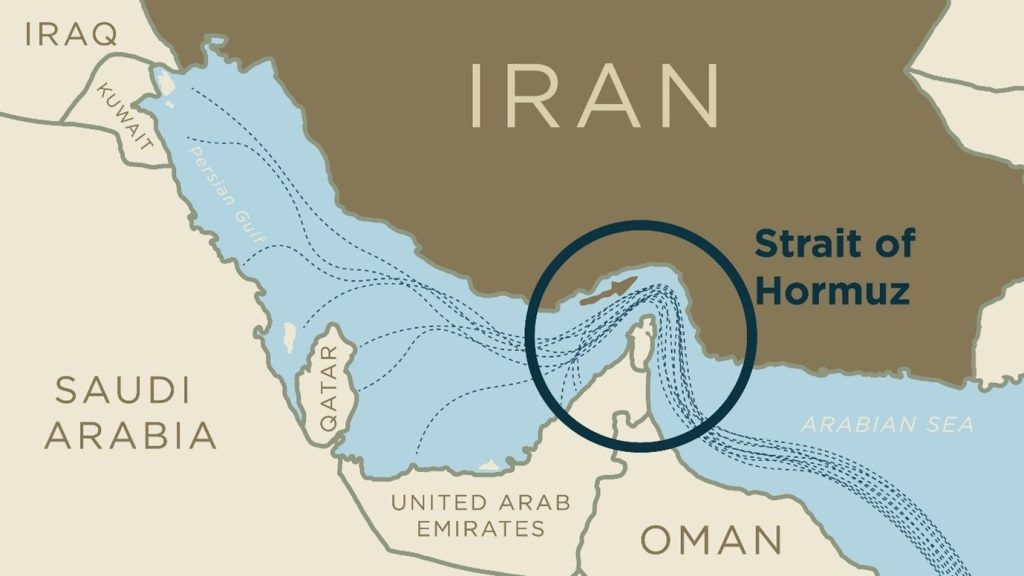
Source: Visual Capitalist, based on data from the U.S. Energy Information Administration (EIA).
The Strait of Hormuz connects major oil exporters including Saudi Arabia, Iran, Iraq, Kuwait and the United Arab Emirates to global markets, particularly Asia.
Because such a large share of global energy trade moves through this narrow shipping corridor, even the perception of disruption can push oil prices higher and increase volatility across global financial markets.
Higher energy prices can influence inflation expectations, economic growth forecasts and corporate profitability. This explains why geopolitical developments in the region often translate quickly into movements across multiple asset classes.
How markets have historically reacted to major geopolitical events
Historical market data shows that while geopolitical conflicts often trigger short-term volatility, long-term market performance has historically been driven by economic growth and corporate earnings.
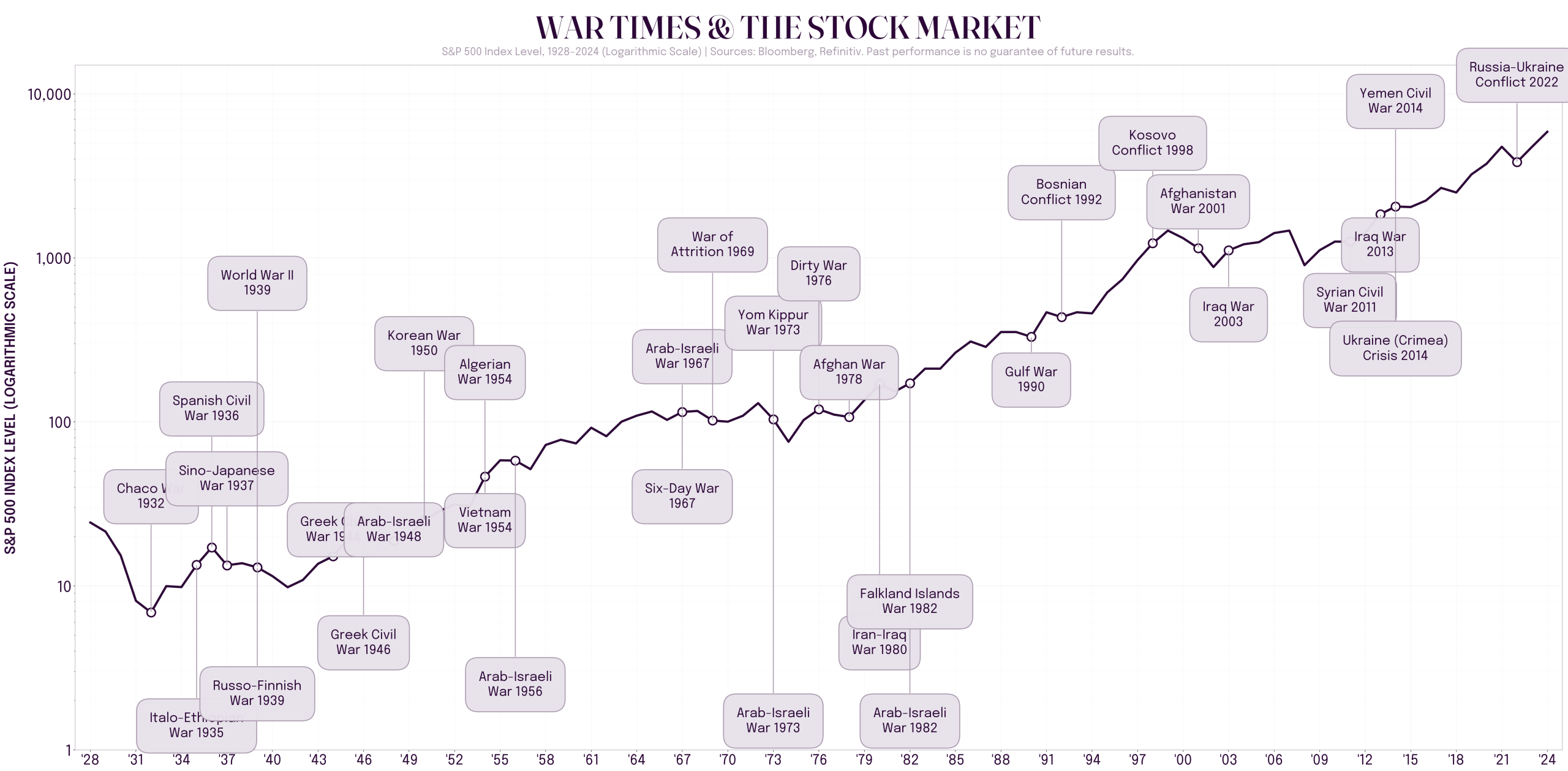
Source: Bloomberg, Refinitiv. S&P 500 historical data, 1928–2024. Past performance is no guarantee of future results.
While the current situation feels extraordinary in the moment, financial markets have experienced many geopolitical crises over the past decades.
Examples include:
- The Vietnam War
- The Gulf War
- The Iraq War
- The annexation of Crimea
- The Russia–Ukraine invasion
Each of these events generated significant uncertainty and short-term market volatility.
However, when market performance is examined over longer time horizons, a consistent pattern emerges. Geopolitical events often produce short-term market disruptions, but they rarely alter the long-term trajectory of global equity markets.
This is because markets ultimately reflect broader economic forces, including:
- corporate earnings
- technological innovation
- productivity growth
- global economic expansion
These factors tend to dominate market performance over time.
The challenge investors face during periods of crisis
Periods of geopolitical uncertainty often trigger strong emotional responses from investors.
When markets fall and headlines intensify, the instinctive reaction may be to move assets to cash and wait for clarity.
However, this introduces another challenge: market timing.
To successfully time the market, investors must correctly predict two extremely difficult decisions:
- When to exit markets
- When to reinvest
Historically, some of the strongest market recoveries occur very close to the worst declines. Missing even a small number of the market’s strongest days has historically reduced long-term investment returns.
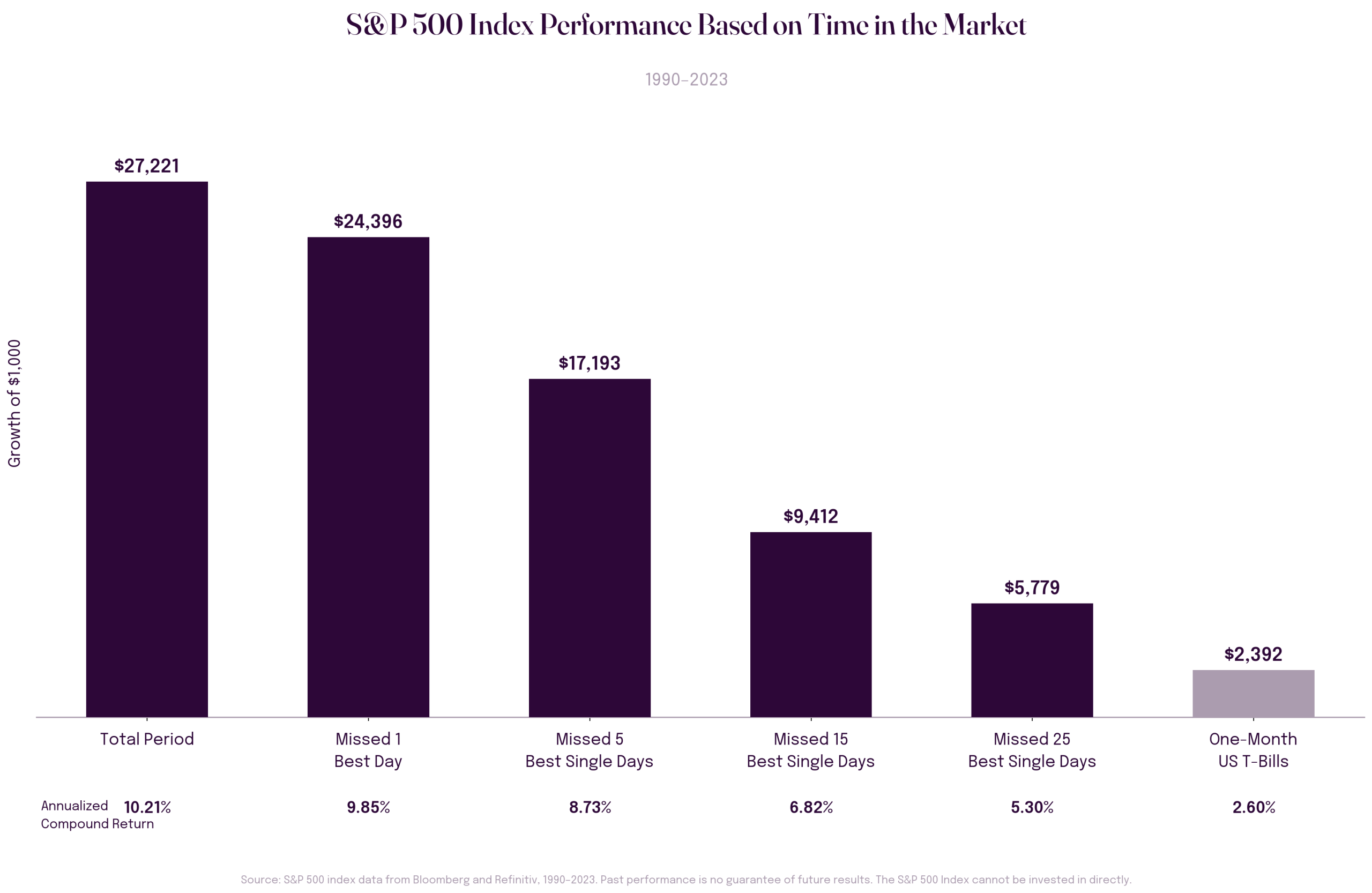
Source: Dimensional Fund Advisors. Data from 1979–2023 using CRSP data. Past performance is no guarantee of future results. The S&P 500 Index cannot be invested in directly.
I explored this principle in more detail in previous articles, Trade shocks and market swings: Hold your ground, and Tariff Tensions: Why staying invested beats market panic which examines why reacting emotionally to short-term market shocks can often undermine long-term investment outcomes.
For long-term investors, remaining disciplined during periods of uncertainty has historically proven more effective than attempting to step in and out of markets.
Trade shocks and market swings: Hold your ground
Tariff Tensions: Why staying invested beats market panic
What disciplined investors focus on instead
During periods of geopolitical tension, experienced investors typically focus on the elements they can control rather than attempting to predict geopolitical developments.
Three principles remain particularly important:
- Staying invested
Long-term investment strategies depend on remaining invested across market cycles rather than reacting to short-term news. - Maintaining diversification
Diversified portfolios help reduce the impact of any single geopolitical event on overall investment performance. - Focusing on long-term fundamentals
Over time, financial markets are driven primarily by economic growth, innovation and corporate earnings rather than short-term geopolitical developments.
The long-term perspective
Financial markets have always operated in an environment shaped by political uncertainty, conflict and economic shocks.
Despite this, global equity markets have historically continued to grow over time as economies expand and companies innovate.
Periods of geopolitical tension therefore, tend to represent temporary disruptions rather than permanent changes in market direction.
For long-term investors, the objective is not to predict geopolitical events, but to build resilient portfolios capable of navigating them.
Final thoughts
Moments like the current one highlight the importance of maintaining perspective in investing.
Geopolitical crises inevitably create uncertainty and short-term volatility. Markets respond rapidly to new information, particularly when global energy supply is involved.
Over the long run, market performance has consistently been shaped more by economic fundamentals than by geopolitical events.
For disciplined investors, maintaining a structured investment strategy and long-term outlook often remains the most effective approach during periods of uncertainty.
Get in touch
Contact GSB today if you would like to discuss any of these matters with our in-house team.
Contact us
Sources
- Reuters – Oil prices surge amid Middle East tensions: https://www.reuters.com
- Reuters – Strait of Hormuz importance to global oil markets: https://www.reuters.com/world/middle-east/what-is-strait-hormuz-why-is-it-so-important-oil
- U.S. Energy Information Administration – Strait of Hormuz energy flows: https://www.eia.gov
- Associated Press – Energy markets and Middle East tensions: https://apnews.com
- JPMorgan Asset Management – Market reactions to geopolitical events
- Morningstar – Investor behaviour and market timing studies
Disclaimer
This communication is intended for general public and is for informational purposes only and should not be relied upon as financial advice. The views expressed are those of the author at the time of publication and may change without notice.
The value of investments and the income derived from them may fall as well as rise and investors may not get back the amount originally invested. Past performance is not a reliable indicator of future results.
GSB Capital Ltd is registered in the Dubai International Financial Centre (DIFC), licence number CL4377, and is regulated by the Dubai Financial Services Authority (DFSA).